Home Solutions Asset Performance Management
Digital Engineering · Practice Area 03

Asset Performance
Management

Connecting reliability engineering, condition data and digital analytics into a single, continuously improving programme — where every maintenance decision is informed, every failure prediction is actionable, and every asset contributes to operational value.

Practice AreaDigital Engineering
Standards AlignmentISO 55001 · GFMAM · IEC 60300
Delivery ModelARaaS® Continuous Programme
Typical Engagement12–36 months
SectorsAll asset-intensive industries
The Challenge

Assets are managed in
silos. Performance suffers.

Most organisations have the data. The problem is that maintenance systems, condition monitoring platforms, inspection records and financial data all exist in separate systems — and no one connects them into a coherent picture of asset health, risk and lifecycle value.

01
Reactive maintenance culture — resources consumed firefighting failures that were predictable weeks earlier.
02
Data without insight — SCADA historians and CMMS full of data, but no one synthesising it into maintenance decisions.
03
No failure mode visibility — maintenance tasks not connected to the failure modes they are designed to prevent.
04
Lifecycle cost blindness — replacement versus repair decisions made without whole-life cost analysis.
05
Governance gap — no systematic review of whether the asset management system is working or improving.
What is APM?

Not a software platform.
A discipline.

Asset Performance Management is the structured discipline of connecting asset strategy, reliability engineering, condition monitoring, maintenance execution and performance analytics into a single, continuously improving system. APM is not a product you buy — it is a capability you build. Optimal's APM programmes are delivered through the ARaaS® framework, ensuring that improvement compounds year on year rather than fading after a one-off project.

40%
Average reduction in unplanned downtime within 18 months of a structured APM programme
Maintenance spend efficiency improvement when failure modes drive task selection
ISO 55001
International standard for asset management systems — APM is the operational layer
GFMAM
Global Forum on Maintenance & Asset Management — 39 subjects mapped to APM maturity
Optimal's APM Approach

Built on failure modes. Driven by data.

Optimal's APM programmes are structured around six interconnected capabilities — from establishing a defensible asset register through to prescriptive analytics and continuous governance review. Each capability reinforces the others; the goal is a self-sustaining system that improves automatically as data accumulates.

01
Asset Register & Hierarchy
Establish a complete, ISO 14224-aligned asset register — every asset identified, classified and positioned in the functional hierarchy that drives all downstream maintenance and reliability decisions.
02
Criticality & Failure Mode Analysis
Asset criticality ranking combined with FMEA/RCM analysis — mapping every critical asset to its failure modes, effects and current controls. The foundation for defensible maintenance task selection.
03
Condition Monitoring Integration
Connecting vibration analysis, thermography, oil analysis, SCADA data and ultrasound into a unified condition picture — detecting potential failures early and shifting maintenance from calendar-based to condition-based.
04
Predictive & Prescriptive Analytics
Moving beyond monitoring to prediction — using machine learning models and statistical process control to forecast failure probability and prescribe optimal maintenance timing, extending intervals without increasing risk.
05
Work Management Optimisation
Ensuring that analytical outputs translate into executed work — integrating APM findings with CMMS task scheduling, planner workflows and shutdown management to close the loop between insight and action.
06
Governance & Continuous Review
Structured quarterly reviews of APM system performance — measuring KPIs, identifying new failure modes, updating criticality rankings and ensuring the programme evolves with the asset base and business context.
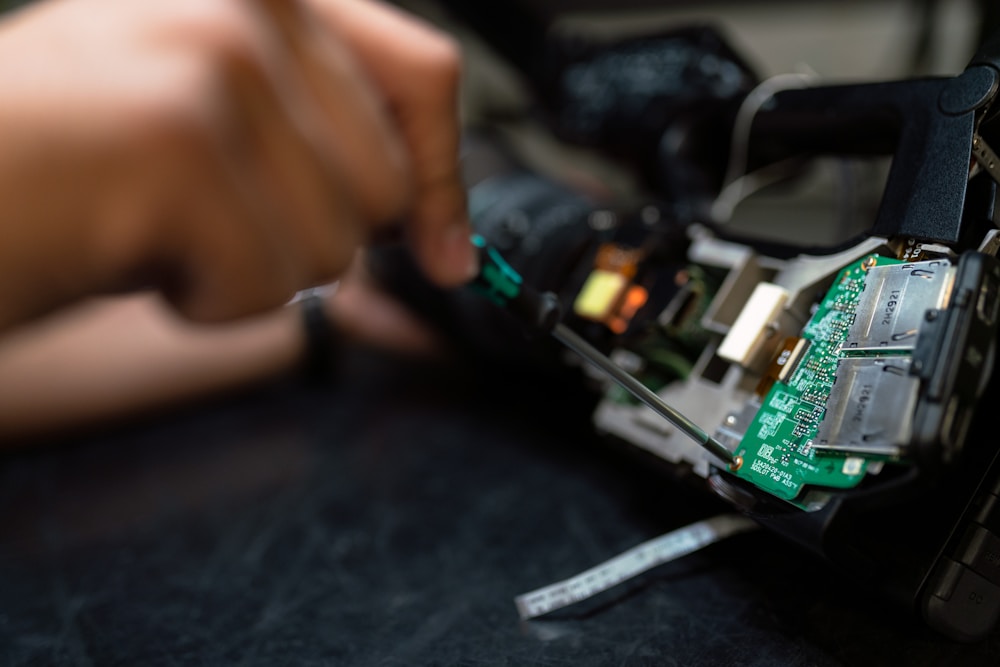
Asset performance analytics and condition monitoring
The ARaaS® Connection

APM is the programme layer
of ARaaS®

Asset Performance Management is not a standalone service — it is the discipline that the ARaaS® framework is designed to deliver. Every ARaaS® programme is, at its core, an APM programme: structured around your asset base, failure modes and operational context, and designed to compound improvement continuously.

Where point-solution APM software vendors sell platforms, Optimal provides the engineering capability to make APM work — the failure mode libraries, the condition monitoring methodology, the analytical models and the governance structure that software alone cannot deliver.

Reliability Centred Maintenance (RCM) as the analytical foundation
FMEA libraries covering 40+ asset classes
Condition monitoring protocol development
CMMS optimisation & data quality improvement
KPI framework aligned to ISO 55001 objectives
Explore the ARaaS® Framework
What You Receive

APM programme deliverables

01
APM Strategy Document
A documented APM strategy aligned to your business objectives — defining scope, asset criticality tiers, performance targets, KPI framework and governance cadence for the programme lifecycle.
02
Criticality Register
A complete asset criticality register — every asset ranked by consequence of failure across safety, production, environmental and cost dimensions, with criticality-informed maintenance strategy for each tier.
03
FMEA / RCM Outputs
Living failure mode registers for all critical assets — failure mode identification, effect analysis, criticality classification and recommended maintenance tasks mapped to failure modes, not just calendar intervals.
04
Condition Monitoring Plan
A structured condition monitoring programme — technology selection, measurement protocols, alert threshold development and data integration architecture connecting CM data to CMMS work order generation.
05
Analytics Dashboard & KPI Framework
A performance measurement framework with operational dashboards — tracking availability, MTBF, MTTR, maintenance backlog, defect rates and GARPI™ maturity scores against targets and industry benchmarks.
06
Governance & Review Protocol
A structured governance protocol for ongoing APM programme management — quarterly performance reviews, failure mode database updates, KPI trend analysis and annual strategic alignment reviews.
Programme Evidence

APM in practice —
measurable outcomes

Optimal has deployed APM programmes across mining, oil & gas, nuclear, power generation and process industries. Across all sectors, the pattern is consistent: connecting failure modes to maintenance tasks, condition data to work orders, and analytics to decisions produces compounding reliability improvement within 12–18 months of programme launch.

Mining — 34% reduction in unplanned conveyor stoppages within 14 months
Power Generation — MTBF improvement from 1,200 to 2,100 hours on critical rotating plant
Oil & Gas — maintenance cost per production unit reduced by 22% over 24-month programme
Nuclear — ISO 55001 certification achieved within 18 months of APM programme launch
ARaaS® Toolbox

The tools that make
APM work

Optimal's APM programmes are supported by the ARaaS® Toolbox — a proprietary set of reliability engineering capabilities, failure mode libraries, analytical models and field diagnostics that are not available off-the-shelf. They are the reason Optimal APM programmes deliver faster and compound further than software-led implementations.

Foundation
RCM Analysis & Failure Mode Library
Analytics
Predictive & Prescriptive Analytics Engine
Digital
Optimal360™ Asset Intelligence Platform
Field
Condition Monitoring & Field Diagnostics
Related Services

Services that connect to APM

GARPI™ 2026 · Global Asset Reliability & Performance Index

Where does your APM
programme sit on the maturity curve?

GARPI™ measures your organisation across eight dimensions of asset performance maturity — including APM-specific dimensions covering Digital & Data Maturity, Reliability Engineering and Condition Monitoring. Benchmark against peers in your industry in 12 minutes.

D1
Asset Strategy & Planning
D2
Reliability Engineering
D3
Maintenance Execution
D4
Condition Monitoring
D5
Digital & Data Maturity
D6
Reliability Governance
D7
Workforce Capability
D8
Spares & Materials
Next Steps

Ready to build a
real APM programme?

Every APM engagement begins with a scoping conversation — understanding your asset base, current data landscape and performance gaps. We will tell you honestly what is achievable and what it will take.

Global — Africa & Middle East
Dr Leslie Moyo · Director Africa
enquiries@optimal.world
+44 7932 581 317
Africa — Project Delivery
Danie Fourie CA(SA) · Project Manager
enquiries@optimal.world
+27 82 566 0047
Menu
Practice Areas
Operational Readiness Operations & Maintenance Digital Engineering Advisory & Optimisation Asset Accounting & Governance
Specialist Industries
Pharma & Life Sciences Chemical & Process
Our Differentiators
ARaaS® Framework Optimal360™ View All Services →
Oil & Gas Mining & Metals Nuclear Power & Utilities Pharma & Life Sciences Chemical & Process FMCG All Industries →
About Optimal Case Studies GARPI™ Survey Optimal Academy Insights Contact Us
GARPI™ SURVEY CONTACT US